
Breaking the Mold: Leadership, Endurance, and the Cost of Holding It Together
Breaking the Mold: Leadership, Endurance, and the Cost of Holding It Together

2025 was a year in which the internal structures that once shaped my identity, loyalties, and sense of direction were disrupted and reshaped. What I once called ambition began to feel like survival. What I had considered loyalty began to feel like self-betrayal. The year became less about professional advancement and more about truth-telling, healing, and spiritual realignment.
I chose to reflect on this year by treating my personal experience as data and analyzing memory, emotion, culture, and context through established scholarly frameworks (Ellis et al., 2011). It allows for the integration of theory and testimony—analyzing lived experience not as anecdotal but as a site of theological, psychological, and leadership inquiry.
The purpose of this work is to explore the disruption, revelation, education, integration, rebuilding, and rebirth that shaped my 2025 journey. Using my story as the central thread, I engage academic research from trauma studies, leadership and organizational behavior, developmental psychology, and Christian spiritual formation. I argue that transformation does not occur merely through external success but through a dance between disruption and reflection, as Parker Palmer (1999) describes in his call to “listen to the inner teacher.” This is not simply a reflection on what I did but on what had to die in me—and what was reborn—as I broke free from environments, mindsets, and expectations that no longer served the calling on my life.
Disruption | The End of the Beginning
Disruption entered my life abruptly, despite the truth that I had sensed its approach long before it arrived. The turning point occurred the day after a major workforce development event I had planned for months—an event that embodied collaboration, mission, and the type of communal impact that had always grounded my work. That day felt like alignment. It felt like purpose. Yet less than twenty-four hours later, the environment that once felt stable revealed its fault lines.
When I walked into the office the following morning, I noticed my colleagues preparing materials for an impromptu board meeting. There was a heaviness in the air, a quiet tension I could not explain. At the time, I did not realize this meeting would culminate in my termination, but my intuition had already begun signaling what I had been unwilling to acknowledge. My mentors and professional coaches had warned me for months: “Prepare yourself. Something is coming. Do not wait until the environment chooses for you.” Still, I remained. I held onto the hope of an anticipated leadership transition. I believed loyalty, commitment, and endurance could carry me through instability.
Psychologically, this pattern reflects what the research describes as the impact of intermittent reinforcement—moments of affirmation or connection that obscure the underlying dysfunction of an environment (Twenge, 2017). My attachment to my team, the depth of our work, and the mission we served created enough light to mask the shadows. I convinced myself the instability was temporary. I convinced myself I could withstand whatever turbulence existed until change arrived. I believed staying was strength.
The board’s decision shattered that narrative. In a single moment, the professional role that once shaped my daily rhythm was removed, and beneath that removal lay a deeper revelation: I had been functioning in an environment that quietly triggered past wounds. Trauma research demonstrates that unpredictable or emotionally volatile environments can activate physiological and psychological stress responses rooted in earlier adverse experiences (Felitti, 2002; Yehuda & Lehrner, 2018). In hindsight, the signs were visible long before the termination. Chronic fatigue. Hypervigilance. Emotional suppression. A persistent sense of managing instability rather than growing within it. What I labeled “stress” was, in fact, my nervous system communicating distress.
Complicating the disruption was the undeniable reality that not everything in the environment was harmful. My team created meaningful work. Collaboration often carried a sense of creativity and alignment. There were leaders whose strengths shaped my own understanding of leadership. These moments made it difficult to discern the emotional cost of staying. The bright spots became justification for endurance, even when my internal state signaled otherwise.
The termination did not simply end a job. It exposed the internal conflict I had been navigating: the tension between my loyalty to others and my responsibility to myself. It revealed how easily purpose can disguise harm, how devotion to mission can overshadow personal well-being, and how comfort can become its own form of captivity.
Disruption, then, was not just situational; it revealed what needed to shift within me. It forced me to confront the psychological and spiritual cost of environments where endurance becomes self-betrayal and where loyalty is mistaken for health. This rupture marked the beginning of a deeper unraveling—one that ultimately cleared space for truth, healing, and transformation.
Revelation | Navigating What Had Been Hidden
Revelation emerged slowly, not as a single epiphany but as the gradual unmasking of truths I had long sensed yet avoided naming. In the days and weeks following my termination, the emotional fog began to lift, and I could finally see the broader patterns that had shaped my experience. What became clear was not only the personal impact of the environment but the systemic contradictions embedded within it.
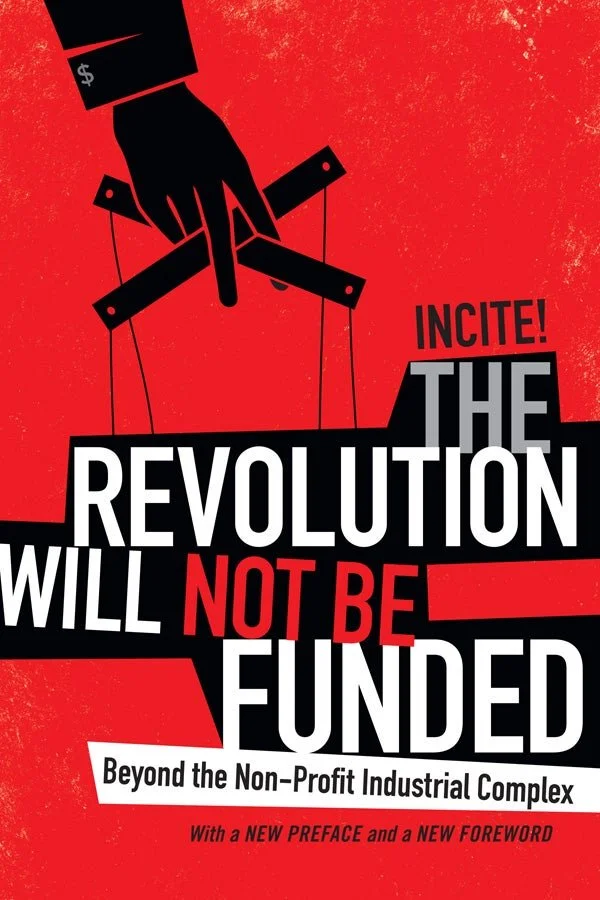
The irony was difficult to ignore. The organization operated under the banner of social, racial, and economic justice—principles that had drawn me to the work in the first place. We served communities impacted by inequity. We championed empowerment, access, and liberation. Yet internally, many of the very patterns we worked to dismantle in the community were reproduced within the organizational culture itself. Rather than interrogating how colonization, hierarchical power structures, and inherited patterns of dysfunction show up in nonprofit spaces, the institution often reinforced them. Decisions were made without transparency, emotional safety was inconsistent, and those most committed to the mission frequently carried the heaviest burdens.
This contradiction created a deep cognitive dissonance. Research on organizational justice suggests that environments lacking fairness, voice, and psychological safety often lead to emotional exhaustion and diminished well-being, particularly among employees engaged in mission-driven work (Northouse, 2026). The weight is heavier in justice-oriented organizations because the expectation of alignment between values and culture is so strong. When that alignment fractures, it cuts at the core of one’s sense of purpose.
I realized, with unsettling clarity, that the harm I experienced did not exist in spite of the mission—it existed alongside it. And for those of us doing the work from a place of lived experience, calling, and community commitment, the emotional cost became amplified. The culture did not deconstruct the systemic forces it sought to challenge; it inadvertently replicated them.
This revelation initiated a deeper internal reckoning. I began to see how my own patterns of endurance were shaped by both personal history and professional socialization. Trauma research indicates that individuals with histories of adversity often tolerate dysfunction longer, interpreting instability as familiar rather than dangerous (Felitti, 2002; Yehuda & Lehrner, 2018). I recognized how easily my commitment to justice had merged with unresolved patterns of survival—how loyalty, service, and a sense of calling had become intertwined with self-sacrifice.
The revelation was painful, but it was clarifying. It helped me place my experience within a larger context, one that extended beyond individual personalities or isolated events. It revealed the need for deeper systemic reflection within organizations that claim to serve marginalized communities. It highlighted the emotional and spiritual toll on those who lead from the margins. And most importantly, it uncovered the truth that my departure, though unexpected and abrupt, was part of a larger unraveling that needed to take place.
Revelation made visible what disruption exposed: that something in me—and something around me—had to change.
Education | Being Reshaped From the Inside Out
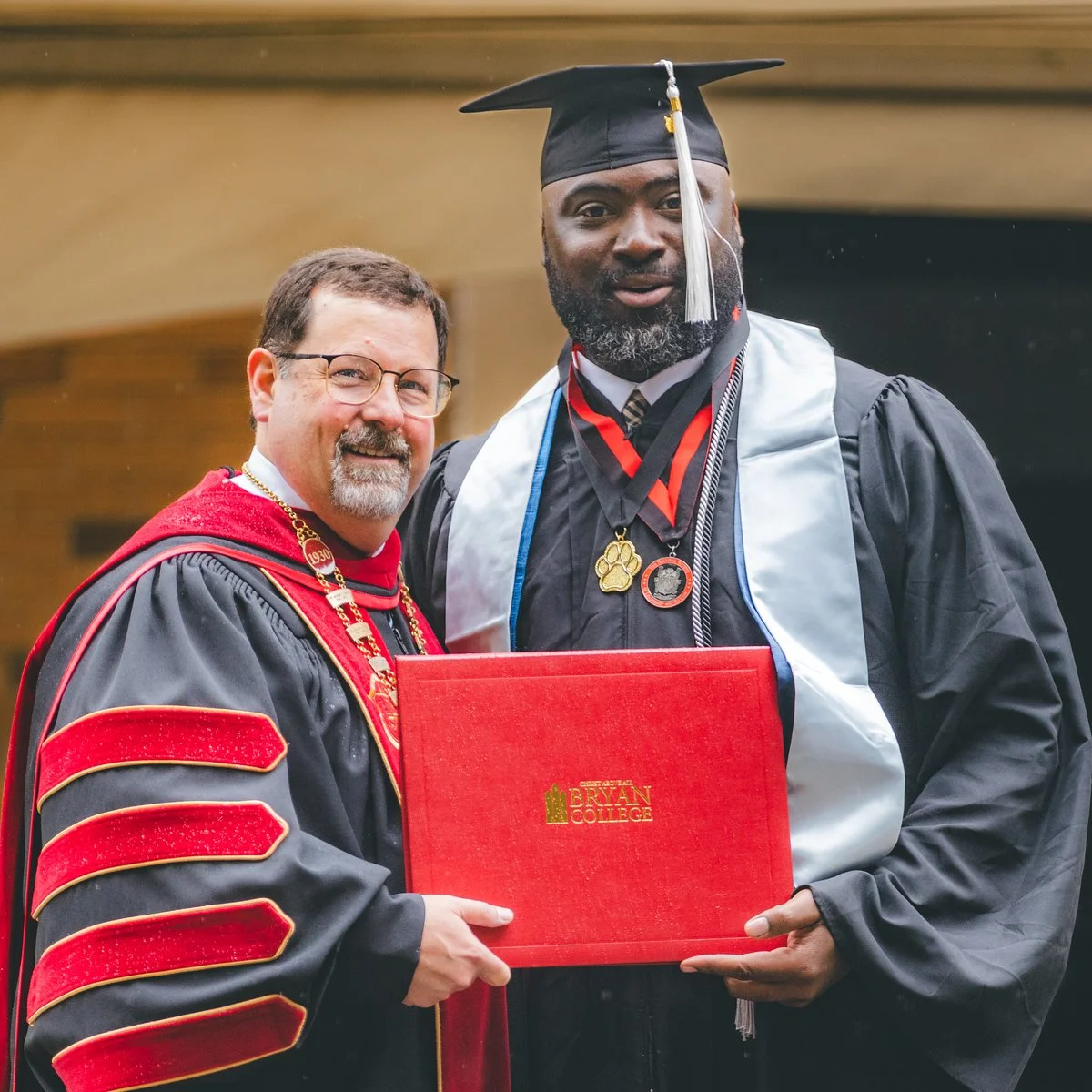
During this transition, education became the ground that steadied me. Completing my Bachelor of Science in Psychology and immediately entering a Master of Arts in Management and Leadership created an interpretive lens through which I could finally understand what had happened to me. The timing was providential. These academic frameworks arrived precisely when my internal world needed language, clarity, and validation.
One of the most pivotal moments came in July 2024, when my therapist listened to a detailed description of my workplace and quietly said, “This environment is likely triggering your PTSD.” At the time, her statement felt both startling and strangely familiar—almost as if she was giving voice to something my body had long known. Trauma research shows that the nervous system reacts strongly to environments marked by unpredictability, emotional volatility, and inconsistent relational cues (Felitti, 2002; Yehuda & Lehrner, 2018). Hearing her say this allowed me to reinterpret symptoms I had minimized for months: the chronic fatigue, the hypervigilance, the emotional bracing I carried into every workday. These were not signs of personal inadequacy; they were physiological indicators of sustained threat.
Engaging trauma literature made the connection even clearer. Felitti’s (2002) work highlights how adverse experiences shape the stress response across the lifespan, and Yehuda and Lehrner (2018) demonstrate how trauma echoes through emotional patterns and relational sensitivity. Through these frameworks, I realized my nervous system had been interpreting the organizational dynamics long before my mind allowed itself to acknowledge them.
Leadership theory added a complementary layer. Scholars such as Northouse (2026) and Daft (2018) emphasize the necessity of clarity, emotional regulation, and psychological safety as core components of healthy organizational functioning. When contrasted with these models, the inconsistency and instability I experienced were not normal fluctuations—they were signs of systemic misalignment. My therapist’s insight illuminated the connection between theory and experience: the culture was not merely stressful; it was harming me.
Spiritual maturity studies deepened this insight further. McMinn (2011) describes the importance of truth-telling in counseling, noting that healing requires honest engagement with the internal world. Thurman (2022) argues that systems can reproduce harm when they fail to examine the hidden structures of power and fear that animate them. Within this spiritual and psychological framework, my experience no longer appeared as personal failure but as a reflection of broader patterns that required discernment and distance.
The irony revealed in the previous section—the disconnect between the organization’s mission and its internal practices—came into sharper focus through education. I began to understand how my loyalty, sense of calling, and willingness to endure difficulty intersected with unresolved patterns of survival. What I had accepted as “normal stress” was actually an embodied warning.
Ultimately, education did not numb the pain of disruption; it interpreted it. It provided the vocabulary, concepts, and theological grounding that allowed me to understand the dissonance I carried for so long. It helped me see that leaving was not a failure of resilience but an alignment with truth. Education became both mirror and mentor, revealing not only what happened to me but who I was becoming through the process.
Integration | When Knowledge Becomes Wisdom
Integration marked the moment when the intellectual clarity gained through education began to settle into my emotional and spiritual life. It was not an immediate or linear process. Instead, it unfolded gradually, as the frameworks I had studied began to reshape how I understood myself, my work, and the patterns that had governed my decisions for years. If disruption exposed the wound and education named it, integration helped me understand what healing might require.

Psychologically, integration involved acknowledging that my nervous system had been operating in survival mode long before I consciously recognized it. The insights from trauma studies made this impossible to ignore. Felitti (2002) and Yehuda and Lehrner (2018) describe how bodies shaped by adversity often normalize environments that should register as unsafe. I began to see how my endurance in the workplace had less to do with strength and more to do with familiarity—how instability felt tolerable because it resembled earlier experiences where resilience meant silence, adaptation, and emotional compression.
Integration also required confronting my relationship with leadership. As I studied models of empowering, ethical, and emotionally regulated leadership (Northouse, 2026; Daft, 2018; Behrendt et al., 2017), I realized how easily I had internalized the belief that effective leaders absorb harm quietly, carry burdens without complaint, and remain loyal regardless of personal cost. These expectations were not virtues; they were distortions produced by systems that mistake over-functioning for commitment. Recognizing this allowed me to dismantle internal narratives that once bound my identity to endurance.
Spiritually, integration took the form of remembering what Thurman (2022) describes as the “inner authority” that emerges when individuals refuse to be defined by fear or external pressure. My earlier spiritual metaphor of Jacob wrestling at the Jabbok became increasingly relevant. Jacob’s transformation required him to confront not only God but also himself—his patterns, fears, and the identity he carried into every encounter. My own wrestling mirrored that journey. Through prayer, reflection, and honest conversation, I began to untangle the ways ministry, leadership, and service had become entangled with self-sacrifice in ways God never required.
McMinn (2011) writes that integration occurs when one learns to hold psychological insight and spiritual truth together without diminishing either. This became the core of my process. I learned to say: Yes, the environment harmed me. Yes, the work was meaningful. Yes, I loved the team I served. Yes, I stayed longer than was healthy. And yes, leaving was necessary for my spiritual and psychological integrity.
Holding all of these truths simultaneously created a kind of internal alignment I had not felt in years. Integration required me to release binary thinking—the idea that one side must be wholly right and the other wholly wrong. Instead, it taught me to hold complexity with compassion. I learned that people can shape you and still harm you. Organizations can do good work and still reproduce systems of dysfunction. A mission can inspire community transformation while failing to embody the justice it proclaims. And I can be committed to a cause without sacrificing myself to it.
The most significant aspect of integration, however, was reclaiming my own voice. For years, I prided myself on being adaptable, steady, and unshakeable. Yet the cost of that steadiness was silence—silence about my needs, my stress, and the internal warning signs I ignored. Integration required me to recognize that my voice is not optional in my own story. It is essential.
As these insights converged, I began to feel the early contours of something new forming beneath the surface. Not yet rebuilding, not yet rebirth—but the internal coherence necessary for both. Integration was the space where truth, healing, calling, and identity began to align, preparing me for what would come next.
Rebuilding | Returning to Myself

Rebuilding marked the phase where wisdom translated into action. It did not look like grand gestures or rapid transformation; instead, it resembled a steady reorientation toward truth—truth about who I am, what I value, and what I am called to build. The psychological and spiritual clarity I gained made it impossible to return to the patterns that once shaped my decisions. Rebuilding required constructing a life that aligned with the integrity I had reclaimed.
One of the first signs of rebuilding was the creation of Welcome to Today. What began as an idea whispered in my spirit became a tangible expression of the healing, leadership, and contemplative practices I had spent years cultivating. Research on post-traumatic growth suggests that individuals who process adversity through meaning-making often develop new commitments, relationships, and pathways that reflect deeper purpose (Runyan et al., 2024). Welcome to Today embodied this trajectory. It provided space for mindfulness, emotional intelligence, leadership development, and creative expression—areas where I had found both personal transformation and professional clarity.
Writing also became a central part of rebuilding. Becoming a published author was more than an achievement; it was a form of integration made visible. Through storytelling, children’s literature, and reflective writing, I found language for truths that had lived in my body long before they reached the page. In this sense, authorship became both catharsis and calling, a way to translate my internal journey into gifts that could serve others. McMinn’s (2011) work on the intersection of psychology and spirituality suggests that healing becomes transformative when it extends beyond the self and contributes to communal flourishing. Writing offered precisely that—a way for my personal journey to become a shared resource.

Academically, rebuilding involved stepping fully into graduate education with a renewed sense of agency. Instead of seeing my studies as merely professional development, I began to experience them as tools for discernment. Leadership theory challenged me to refine my understanding of influence, vulnerability, and empowerment (Wu & Lv, 2025; Ye et al., 2022). Organizational psychology helped me differentiate between environments that cultivate growth and those that suppress it. Each course became a step in reclaiming the version of leadership I believed in—one marked by clarity, justice, compassion, and accountability.
Rebuilding also meant reexamining relationships, boundaries, and sources of identity. As I learned to prioritize psychological safety and spiritual integrity, I discovered the importance of surrounding myself with people and institutions that honor both. Thurman (2022) describes how marginalized individuals often internalize the belief that they must accept harm for the sake of belonging. Rebuilding required me to reject that notion. It demanded that I redefine loyalty—not as silent endurance, but as alignment with environments that respect my humanity.
Rebuilding was not without grief. Letting go of the organization, the work, and the identity I once held came with mourning. Yet this grief carried clarity. It created space for new forms of life to emerge, unburdened by the expectations and patterns that had once confined me. Slowly, I learned to trust the emerging structure of my life—to trust that what was being rebuilt was sturdier, healthier, and truer than what had been lost.
Ultimately, rebuilding became the embodied expression of integration. It was the moment when internal transformation began to manifest externally, shaping my choices, creativity, leadership, and relationships. It prepared the ground for rebirth—not as a return to who I once was, but as the emergence of someone transformed by truth, healed through insight, and guided by purpose.
Rebirth | The Year the Mold Broke
Rebirth did not arrive with fanfare or dramatic revelation. It unfolded quietly, almost reverently, as the internal work of disruption, revelation, education, and rebuilding began to crystallize into a new way of being. Rather than returning to who I had been before, I emerged with a different orientation—one marked by clarity, groundedness, and a deeper sense of calling. The transformation was less about becoming someone new and more about becoming someone true.
Spiritually, this season resembled what theologians describe as a “breaking of the mold,” a moment when familiar identities and internal structures give way to forms shaped by divine intention rather than fear, habit, or inherited expectation. Keller (2016) describes divine disruption as a means through which God clears space for authentic vocation. This framing helped me interpret the events of 2025 not as arbitrary loss but as purposeful reformation. The metaphor of Jacob wrestling at the Jabbok (Genesis 32:22–30) offered a parallel. Jacob’s struggle revealed not only the presence of God but the accumulated weight of patterns, fears, and identities he had carried for years. His wrestling left him with a limp—a mark of vulnerability—and a new name, symbolizing the beginning of a truer existence.

My own wrestling resembled this journey. I confronted versions of myself shaped by unstable environments, internalized expectations of endurance, misplaced loyalties, and the belief that my value was tied to how much I could carry. The breaking of the mold was not a single moment; it was a series of subtle shifts—small surrenders, gradual awakenings, and the steady realization that the life I had outgrown could no longer contain the person I was becoming. The “limp,” metaphorically speaking, was the humility and sobriety with which I began to approach my calling. It was the reminder that transformation carries cost, yet it also carries freedom.
Psychologically, rebirth involved reorienting my nervous system toward safety, trust, and rest. Trauma studies emphasize that healing requires environments where predictability, emotional regulation, and relational security are possible (Felitti, 2002; Yehuda & Lehrner, 2018). For the first time in years, I felt my body exhale. Without the constant vigilance of my former environment, I could think more clearly, dream more freely, and feel more fully. The absence of chaos revealed how much internal space had been consumed by survival.
Leadership identity also shifted during this phase. Exposure to empowering and emotionally intelligent leadership frameworks challenged me to reconstruct my understanding of influence—not as endurance or invisibility but as presence, vulnerability, and clarity (Northouse, 2026; Wu & Lv, 2025). Rebirth meant reclaiming leadership on my own terms, grounded not in over-functioning but in alignment with values, integrity, and spiritual discernment. It meant choosing roles and partnerships that honored my humanity rather than requiring its sacrifice.
Creatively, rebirth showed itself through expansion. Welcome to Today grew in purpose and clarity. Writing deepened. My voice matured, becoming less about performance and more about truth. The internal shift manifested outwardly as an increase in capacity for vision, collaboration, and service. This aligns with post-traumatic growth research, which notes that individuals who meaningfully integrate adversity often experience enhanced purpose, creativity, and relational depth (Runyan et al., 2024).
Most importantly, rebirth restored my sense of agency. For the first time in a long time, I felt free to choose a life rooted in peace rather than comfort, calling rather than survival. The breaking of the mold revealed that the work of becoming is ongoing—a continuous unfolding shaped by truth, guided by discernment, and sustained by grace.
Rebirth, then, was not the end of the story but the beginning of a new orientation. It marked the moment when the internal reconstruction became external reality—a life built not on endurance but on belonging, intention, and spiritual alignment. It prepared me to walk forward not as who I had been in the seasons of disruption, but as who I had become through them.
Conclusion
Reflecting on 2025 revealed that transformation rarely occurs through external milestones alone. It unfolds through the convergence of disruption, revelation, education, integration, rebuilding, and rebirth—each phase illuminating a different dimension of identity, trauma, leadership, and spiritual formation. By treating personal experience as data, I was able to analyze the psychological, organizational, and theological currents that shaped my year, allowing insight to emerge not only from memory but from theory, research, and reflective practice (Ellis et al., 2011).
The disruption of my termination exposed patterns I had subconsciously normalized, revealing how trauma histories and internalized expectations can shape endurance in environments that compromise well-being (Felitti, 2002; Yehuda & Lehrner, 2018). Revelation expanded this understanding by highlighting the painful irony that organizations committed to justice can inadvertently reproduce the very harms they aim to dismantle, particularly when they fail to interrogate hierarchical and colonized forms of leadership. Education provided the vocabulary and theoretical grounding necessary to understand these dynamics—to see how leadership models, trauma frameworks, and spiritual traditions intersect in shaping human behavior and organizational culture.
Integration invited me to hold these insights with compassion and complexity, dissolving binary thinking and allowing space for both gratitude and truth. Rebuilding translated this inner work into outward practices through entrepreneurship, authorship, academic growth, and renewed boundaries grounded in psychological safety and spiritual integrity. Finally, rebirth signified the emergence of a self formed not by survival patterns but by discernment—a “breaking of the mold” that echoed the theological arc of Jacob’s transformation at the Jabbok and the psychological arc of post-traumatic growth.

Taken together, these phases reflect a larger truth: transformation is not merely about overcoming harm but about becoming more whole through the process of confronting it. It requires the courage to name what wounds, the humility to receive insight, and the willingness to reconstruct a life aligned with truth rather than habit. The work of 2025 was not simply vocational or academic—it was deeply spiritual. It demanded that I examine the stories I inherited, the environments that shaped me, and the callings that awaited me beyond them.
As I move forward, the lessons of this year remain clear. Well-being cannot be sacrificed for mission. Leadership must be grounded in emotional regulation, empowerment, and justice. Spirituality must confront systems that perpetuate harm. And healing must integrate mind, body, and spirit in ways that honor both the complexity of trauma and the possibility of transformation.
2025 did not just change my trajectory—it changed my understanding of myself. It revealed that becoming is an ongoing process, one marked by clarity, resilience, and divine guidance. The breaking of the mold was not the end; it was the beginning of a life built on integrity, alignment, and the quiet strength that emerges when truth and calling finally converge.
References
Behrendt, P., Matz, S., & Göritz, A. S. (2017). An integrative model of leadership behavior. The Leadership Quarterly, 28(1), 229–244. https://doi.org/10.1016/j.leaqua.2016.08.002
Daft, R. L. (2018). The leadership experience (7th ed.). Cengage Learning. https://platform.virdocs.com/read/2415603/18/#/4/2
Felitti, V. J. (2002). The relation between adverse childhood experiences and adult health: Turning gold into lead. The Permanente Journal, 6(1), 44–47. https://doi.org/10.7812/TPP/02.994
Kim, J. J., Payne, E. S., & Tracy, E. L. (2022). Indirect effects of forgiveness on psychological health through anger and hope: A parallel mediation analysis. Journal of Religion and Health, 61(5), 3729–3746. https://doi.org/10.1007/s10943-022-01518-4
Koenig, H. G. (2012). Religion, spirituality, and health: The research and clinical implications. ISRN Psychiatry, 2012, 278730. https://doi.org/10.5402/2012/278730
McMinn, M. R. (2011). Psychology, theology, and spirituality in Christian counseling. Tyndale House Publishers. https://ecampus.vitalsource.com/reader/books/9781414349237
Misuraca, G. O., Francis, L. M., Mansour, K. A., Greenwood, C. J., Olsson, C. A., & Macdonald, J. A. (2024). Shame and depressive symptoms in men: The moderating role of environmental mastery and purpose in life. International Journal of Social Psychiatry, 70(6), 1175–1185. https://doi.org/10.1177/00207640241263245
Niebuhr, R. (1943). The nature and destiny of man. Charles Scribner’s Sons.
Northouse, P. G. (2026). Leadership: Theory and practice (10th ed.). SAGE Publications. https://platform.virdocs.com/read/
Patton, C. (2017). What made Nehemiah an effective leader? Journal of Applied Christian Leadership, 11(1), 8–14. https://digitalcommons.andrews.edu/jacl/vol11/iss1/23
Palmer, P. J. (1999). Let Your Life Speak: Listening for the voice of vocation. Jossey-Bass.
Petion, A. A. R. (2022). Project Heal Generational Trauma: A mixed-methods participatory action research study of generational trauma and healing in millennial Black women (Doctoral dissertation, Georgia State University). https://doi.org/10.57709/30496279
Quinn, R. E., & Spreitzer, G. M. (1997). The road to empowerment: Seven questions every leader should consider. Organizational Dynamics, 26(2), 37–49. https://doi.org/10.1016/S0090-2616(97)90004-8
Runyan, J. D., Vermilya, S., St. Pierre, M., Brooks, N. W., Fowler, A., & Brewer, T. (2024). A mixed methods experience sampling study of a posttraumatic growth model for addiction recovery. Scientific Reports, 14, Article 53740. https://doi.org/10.1038/s41598-024-5374
Thurman, H. (2022). Jesus and the disinherited. Beacon Press. (Original work published 1949)
Twenge, J. M. (2017). iGen: Why today's super-connected kids are growing up less rebellious, more tolerant, less happy—and completely unprepared for adulthood—and what that means for the rest of us. Atria. https://doi.org/10.1111/fcsr.12345
Wu, H., & Lv, H. (2025). The strength of vulnerability: How supervisors’ emotional support-seeking promotes leadership influence. Behavioral Sciences, 15(10). https://doi.org/10.3390/bs15101326
Ye, P., Liu, L., & Tan, J. (2022). Influence of leadership empowering behavior on employee innovation behavior: The moderating effect of personal development support. Frontiers in Psychology, 13, 1022377. https://doi.org/10.3389/fpsyg.2022.1022377